


Views: 156 Author: Site Editor Publish Time: 2026-10-05 Origin: Site


Miniature gardening is no longer just a niche hobby. Over the past few years, it has exploded into a mainstream staple across the global retail market. However, while foot traffic in garden centers increases, many store owners still struggle to capture the full profit potential of this category. Why? They often stock a scattered, disjointed assortment of miniature items. This chaotic approach confuses buyers, dilutes the visual impact of the display, and ultimately leaves serious money on the table.
By intentionally curating a structured, thematic aesthetic, retailers can inspire customers and naturally encourage bulk purchases. This strategy significantly increases the average order value (AOV). This comprehensive guide will walk you through the essential steps of sourcing, theming, merchandising, and marketing your inventory to maximize retail success and dominate the retail garden decor space.
Strategic Theming Drives Sales: Grouping inventory into recognizable themes helps customers visualize a final DIY project. This naturally prompts them to purchase multiple complementary items at once.
Material Matters: Prioritizing durable, weather-resistant materials ensures high customer satisfaction and drastically reduces return rates due to frost or UV damage.
Smart Sourcing: Procuring inventory through reliable B2B channels allows businesses to maintain healthy profit margins while staying highly competitive with big-box store pricing.
Cross-Merchandising is Key: Displaying miniature accessories right alongside live plants, specialized soil, and hardscaping creates a seamless "one-stop-shop" experience.
Recent retail analytics indicate a massive shift in consumer behavior toward hands-on, experiential purchasing. The global miniature garden and outdoor decor market is experiencing double-digit growth, fueled largely by urban millennials and Gen Z seeking therapeutic, low-maintenance hobbies. Industry experts note a distinct transition from buying single decorative pieces to investing in "experience-based" kits. Post-pandemic shoppers heavily favor screen-free, engaging family activities that perfectly align with the enchanted fantasy aesthetics dominating social media platforms.
Furthermore, this trend appeals directly to a broad demographic. It allows individuals with severe space constraints—such as those living in apartments with tiny balconies—to actively engage in horticulture. Building a miniature landscape has also become a highly documented parent-child activity. When families visit a garden center today, they aren't just browsing; they are actively hunting for specific characters and architectural pieces to complete a shared vision.
From a purely operational standpoint, miniature items offer a distinct advantage: a remarkably favorable footprint-to-profit ratio. Because these pieces are physically small, a retailer can beautifully display hundreds of SKUs on a single endcap. Consequently, this dense merchandising generates exceptional revenue per square foot.
Building upon this, the category fosters a highly lucrative "collector" mindset. Once a consumer establishes their base landscape, they rarely consider it finished. They will return season after season to acquire new characters, seasonal accessories, or architectural upgrades. This recurring foot traffic provides vital, stabilized revenue during traditional off-peak planting seasons.
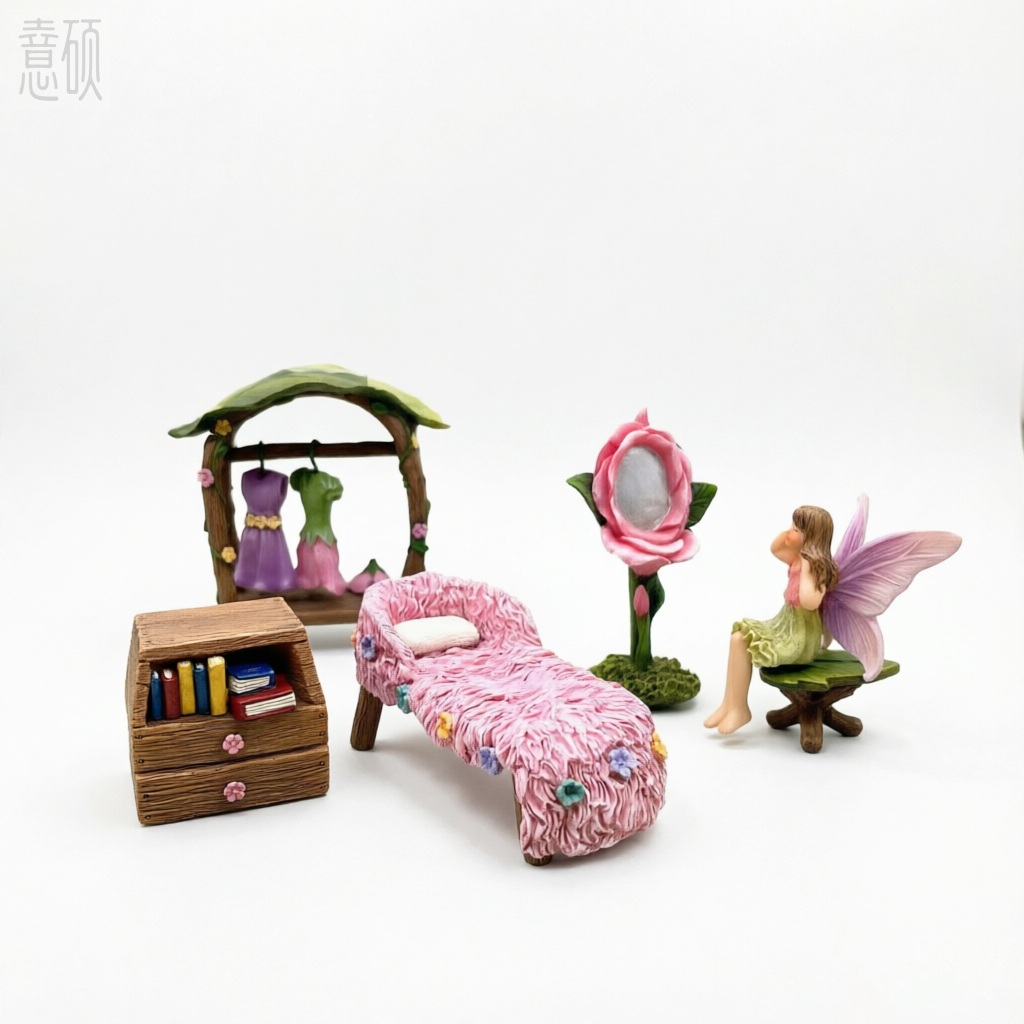
As a retail buyer, your primary concern is reducing the return rate caused by weather degradation. For outdoor applications, polyresin has firmly established itself as the industry standard. Unlike untreated wood, which inevitably rots, or ceramic, which easily shatters under freezing conditions, high-quality resin garden figurines offer superior structural integrity.
Premium models are cast using advanced polymer blends designed to withstand severe temperature fluctuations. For example, standard high-grade figures (typically measuring between 3 to 6 inches and weighing a solid 100-200 grams) feature UV-resistant acrylic paint finishes. This prevents the dreaded "summer fade" that ruins cheap plastic alternatives, ensuring long-term customer satisfaction.
To maximize your ROI, it is crucial to understand how different materials perform on the shelf and in the garden. Below is a quick comparison to guide your purchasing decisions:
Material | Weather Resistance | Detail Resolution | Freight Cost (Weight) | Retail Recommendation |
|---|---|---|---|---|
Polyresin | Excellent (UV & Frost resistant) | High (Captures micro-textures) | Low (Lightweight) | Ideal for primary inventory |
Ceramic | Poor (Prone to frost cracking) | Medium (Glaze obscures details) | High (Heavy & fragile) | Best for indoor terrariums only |
Wood | Poor (Rots without heavy treatment) | Low (Rustic but blunt) | Medium | Use sparingly for specific rustic themes |
Logistics play a critical role in determining retail pricing strategies. Heavy materials incur massive freight costs and demand specialized, reinforced shelving. In contrast, resin is inherently lightweight. For e-commerce retailers, this translates directly to lower shipping fees and fewer instances of transit damage. For physical storefronts, floor staff can easily rotate displays without risk of injury, and standard glass shelving can safely support high volumes of inventory.
A common merchandising mistake is offering a chaotic selection of miniatures. When a customer sees a random assortment, they might buy one piece. However, when they are presented with a thoughtfully curated fairy garden collection, they are inspired to buy the entire scene. Theming is arguably the most effective psychological trigger to increase cart size.
This aesthetic appeals strongly to traditional gardeners and fantasy enthusiasts alike. It relies on natural, rustic elements that blend seamlessly with live foliage. Core inventory should include woodland characters, moss-draped cottages, miniature toadstools, and faux-wood benches. To bring this to life in-store, picture a display featuring a rustic twig bridge spanning a river of blue tumbled glass, nestled deeply within a bed of creeping thyme.
The village theme shifts the focus away from pure nature and toward community-building. This heavily encourages customers to purchase architectural elements. Essential pieces include cobblestone path rolls, miniature storefronts, town square wishing wells, and streetlamps. Position this theme as an ongoing architectural project. Customers usually start with a single cottage and inevitably return to buy neighboring structures.
Seasonal rotations are absolutely crucial for driving Q4 retail sales, a period when traditional outdoor gardening supplies typically see a sharp decline. Introduce autumn-themed figures holding miniature pumpkins in September. Follow this up with winter wonderland sets featuring snow-dusted roofs and tiny holiday lights in November. Launching these items early captures eager decorators looking to update their existing setups.
The profitability of your miniature decor section relies entirely on a sound procurement strategy. When evaluating manufacturers, retail buyers must prioritize consistency in production quality, reasonable Minimum Order Quantities (MOQs), and reliable global shipping capabilities. Partnering directly with established manufacturers eliminates costly middleman markups. By accessing specialized B2B catalogs, buyers can secure a wide variety of wholesale fairy figurines that meet strict quality control standards. This ensures paint finishes and scale remain consistent across large batches.
Procuring items in large quantities is the most reliable method for reducing the Cost of Goods Sold (COGS). By purchasing inventory in bulk, independent retailers and local garden centers can create high-margin bundle deals. This strategy allows smaller businesses to compete effectively against aggressive discount stores. Instead of engaging in a race to the bottom on individual unit prices, you can offer a premium, curated kit at a perceived value that budget stores simply cannot match.
Physical retailers possess a distinct advantage: the ability to showcase fully realized concepts. The most effective strategy is to build a live, completed miniature landscape. Imagine a wide, shallow terracotta bowl placed at eye level on a rustic wooden endcap, brimming with lush Irish moss, a winding pebble path, and cleverly positioned characters.
To convert this visual inspiration into immediate sales, implement the "recipe card" approach. Place a printed materials list directly next to the display detailing exactly what was used to build it. List the specific resin cottage, the exact number of woodland figures, and the specific live succulents. This removes all guesswork, prompting the consumer to place every listed item into their cart.
Online retailers must replicate that in-store inspiration through intuitive User Experience (UX) design. Creating "Shop the Look" landing pages is highly effective. Display a high-quality, lifestyle image of a completed scene equipped with interactive hotspots. When a user hovers over a specific miniature bridge in the photo, a pop-up should allow them to add that exact piece to their cart. Additionally, utilizing "One-Click Bundles" significantly increases AOV while streamlining the checkout process.
Miniature landscapes require specific botanical pairings that maintain a small scale and will not overgrow the resin structures. Strategically placing displays of these specific plants directly adjacent to your figurine aisles is a proven cross-selling tactic. Succulents and cacti are ideal for dry, desert-themed setups due to their low maintenance. Creeping thyme and Irish moss are excellent for creating realistic, scale-appropriate "lawns."
A realistic landscape requires more than just figures and plants; it requires infrastructure. Retailers should stock and aggressively cross-promote hardscaping materials in smaller, consumer-friendly packaging. By offering pea gravel for pathways, tumbled glass beads to simulate rivers, and miniature wooden picket fences alongside your bulk fairy ornaments, you guarantee the customer does not have to visit a competitor to finish their project.
The tactile, visually satisfying nature of building a miniature garden is tailor-made for short-form video content. Platforms like Instagram Reels and TikTok thrive on "How-to" and time-lapse formats. Film a top-down time-lapse of a staff member assembling a garden from scratch—starting with an empty pot, adding soil, placing the plants, and finally arranging the figures. These videos demystify the creation process and showcase your specific inventory in action.
Experiential retail is a fantastic method for driving foot traffic to brick-and-mortar locations. Hosting a weekend workshop appeals strongly to parents seeking engaging activities for their children. Structure the event with a flat ticket fee that covers a basic container, soil, two small plants, and a starter set of figures. Surrounded by your broader inventory during the event, attendees frequently purchase additional premium accessories to further customize their creations.
Shifting your merchandising strategy from selling isolated, random items to offering a cohesive, themed collection is a proven method to boost retail revenue. By prioritizing durable resin materials with UV-resistant specs, you capture and retain a loyal DIY demographic that values quality over cheap plastics. When paired with inspiring visual displays and strategic cross-selling of live plants, your store becomes a premier destination for miniature gardening enthusiasts. Ready to upgrade your seasonal inventory and stop losing sales to chaotic displays? Explore premium, weather-resistant collections and find the perfect pieces for your store at XM Idea Source today.
Resin is widely recognized as the industry standard and the most popular material for outdoor miniature decor. From a retail perspective, polyresin is highly favored because it is incredibly durable, weather-resistant, and capable of holding intricate, hand-painted details. Unlike ceramic, which can shatter easily, or untreated wood, which rots when exposed to moisture, high-quality resin withstands UV exposure and watering cycles. This durability ensures high customer satisfaction and minimizes return rates.
Discount stores typically rely on a high-volume, low-quality model, offering disjointed and generic items. Independent retailers and garden centers can effectively compete by focusing on curation, premium quality, and the overall shopping experience. By offering a cohesive, themed collection made from long-lasting materials, you attract a customer base that values aesthetics over the lowest possible price. Providing in-store inspiration displays and expert advice creates a value-added experience that discount retailers cannot replicate.
The most strategic approach to building new inventory is to purchase wholesale items in strictly defined thematic sets, such as a "Woodland Forest" set or a "Winter Village" set. Buying in bulk lowers your cost per unit and ensures consistency in scale and design across your offerings. This thematic purchasing strategy allows you to easily merchandise cohesive displays and offer attractive bundle deals.
Yes, the miniature gardening category boasts strong year-round sales potential when merchandised correctly. While spring and early summer represent the peak seasons for outdoor patio setups, the trend easily adapts to indoor environments during the colder months. Retailers can sustain momentum in Q3 and Q4 by promoting indoor terrariums and shifting their inventory to seasonal themes, such as spooky autumn villages or festive winter wonderland landscapes.
Consistency is key. The most standard and widely accepted scale in the miniature gardening industry is 1:12 (one inch equals one foot), though many outdoor sets utilize a slightly larger 1:6 scale for better visibility among live plants. When sourcing, ensure that the architectural pieces (like houses and doors) match the height ratios of the character figures you are stocking to avoid a disproportionate, messy look on your shelves.
When sourced smartly through direct B2B manufacturers, miniature garden accessories offer some of the highest margins in the garden decor sector. Retailers typically see gross profit margins ranging from 50% to 70%. Because the items are small and inexpensive to ship in bulk, the landed cost per unit remains very low, allowing retailers to price them attractively for impulse buys while still maintaining excellent profitability.


